GitHub Desktop: What It's Good For (and Where It Stops)
GitHub Desktop is very good at a deliberately narrow job. The useful question is not whether it is good but where its ceiling sits, and whether you have already hit it.
Git workflows, tooling and the occasional strong opinion, from the team building Gitoryx. New posts every week.

GitHub Desktop is very good at a deliberately narrow job. The useful question is not whether it is good but where its ceiling sits, and whether you have already hit it.

Running an AI agent changes what Git is for. It stops being a record of what you wrote and becomes the mechanism you use to keep control of what something else wrote. That shifts which parts of the workflow matter.
Read Article
Every editor has Git built in, which makes a standalone client look redundant. It is not, and the reason is structural rather than a question of features.
Read Article
Gitoryx if you want it to work on any desktop with no account, GitKraken for the deepest feature set, Sublime Merge for the fastest history search. Seven Git GUIs that actually run on Linux, tested across GTK, Qt and the terminal.
Read Article
Git Flow is the branching model everyone has heard of and plenty of teams half-implement. Here is the complete model, the commands, and an honest account of when it is more structure than you need.
Read Article
Tower if a Git client is central to your day, Fork if you want to buy it once, Gitoryx if you care about memory or also work on Windows. Here is how ten clients land on macOS, judged on Apple Silicon builds, battery, Keychain and the case-only renames APFS causes.
Read Article
Fork if you want to buy a client once, TortoiseGit if you live in Explorer, Gitoryx if you want the lightest build or a licence that also covers macOS. Here is how ten clients land on Windows, plus the four settings worth fixing before you blame any of them.
Read Article
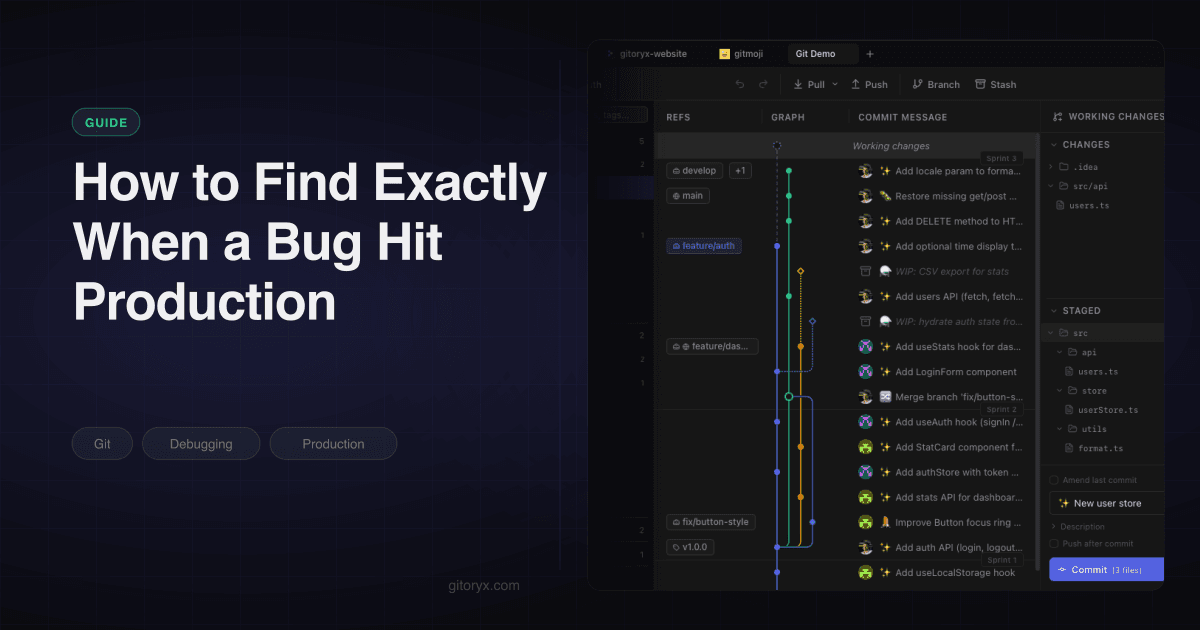
A bug report arrives and the first real question is when it started. Bisect answers that eventually. Reading the graph answers it faster, and often tells you the cause outright.
Read Article
The hours you used to spend writing code are now spent reading it, deciding what actually matters, and figuring out what to do next. That makes the tool you review through as important as the model doing the writing.
Read Article
Git has an answer for nearly every mistake. The hard part is knowing which command to reach for while your heart rate is elevated. Here is the triage, organised by what went wrong.
Read Article
Git almost never deletes a commit when you think it does. The reflog records everywhere HEAD has been, which means most of the moments that feel unrecoverable take about thirty seconds to fix.
Read Article
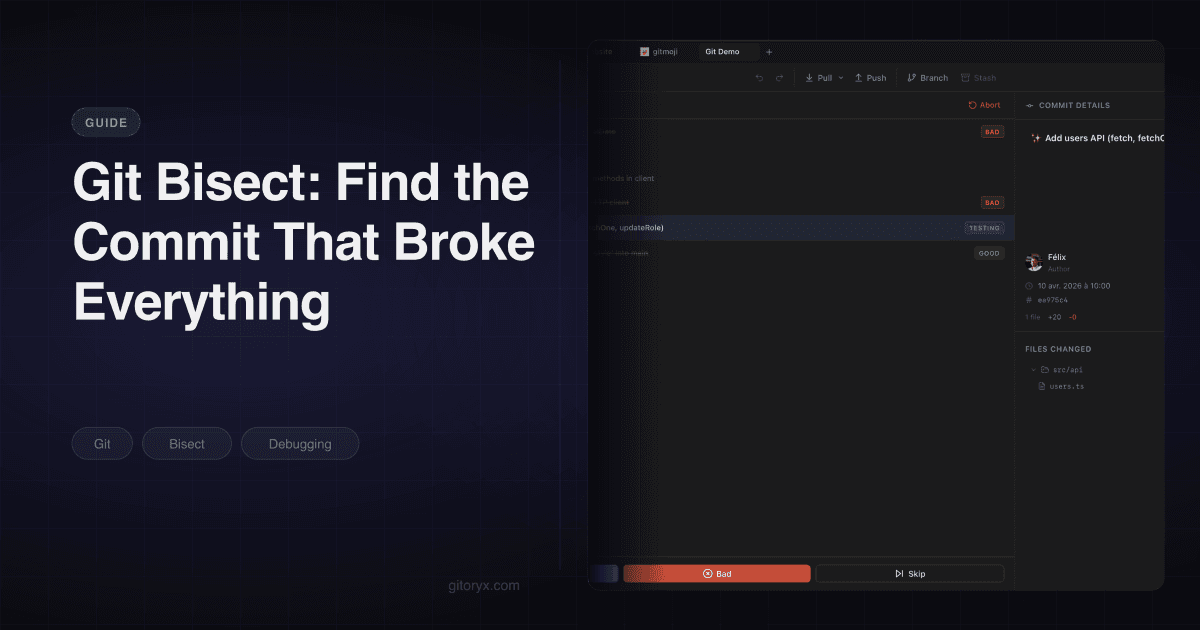
You know it worked two weeks ago and it is broken now, with two hundred commits in between. Bisect finds the culprit in eight steps instead of two hundred. Here is how to run it, automate it, and avoid the traps.
Read Article
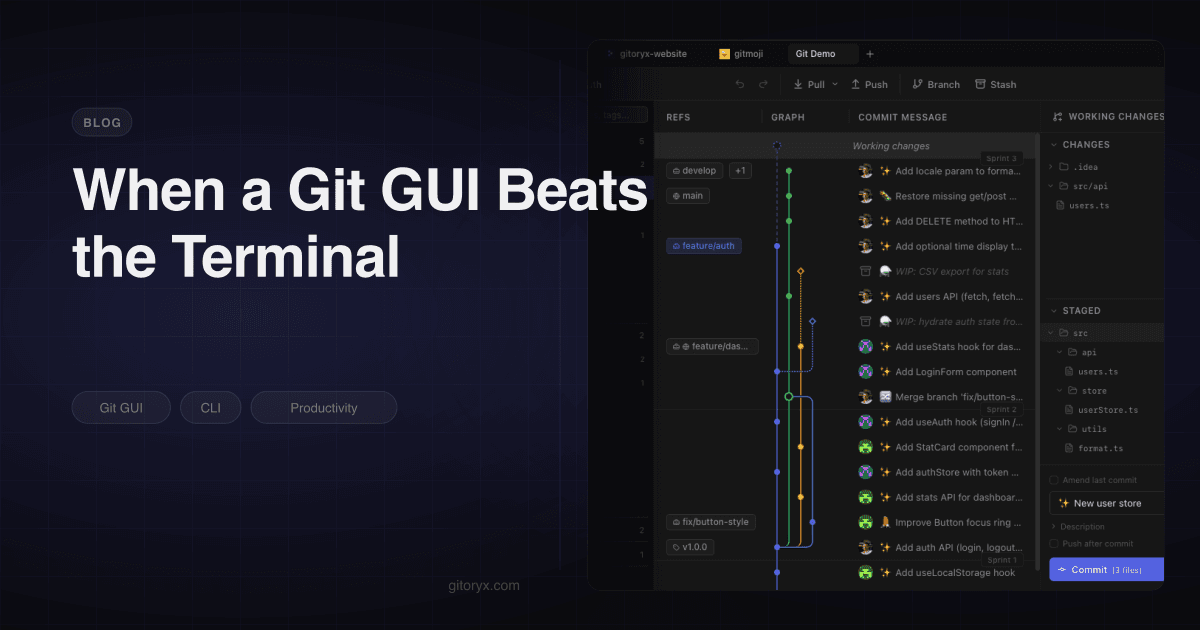
Most experienced developers use both a terminal and a GUI. The interesting question is not which one is better but which operations belong in each. Here is the honest split, operation by operation.
Read Article
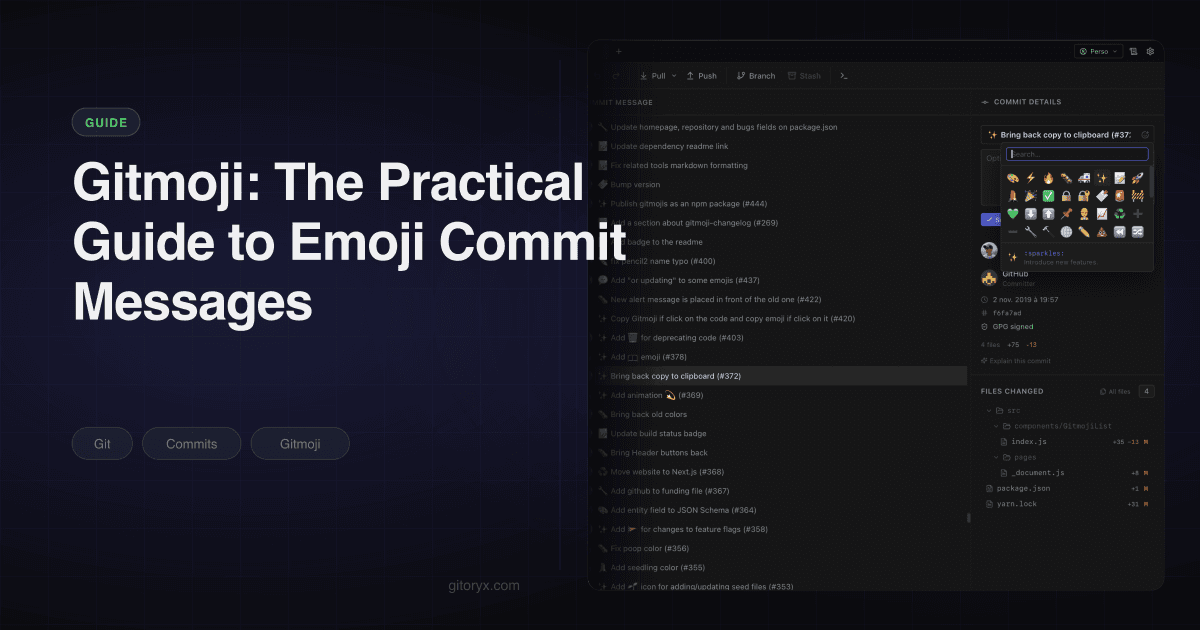
One emoji at the front of a commit message tells you the type of change before you have read a single word. Here is the vocabulary worth learning, the tooling that makes it stick, and the mistakes that turn it into noise.
Read Article
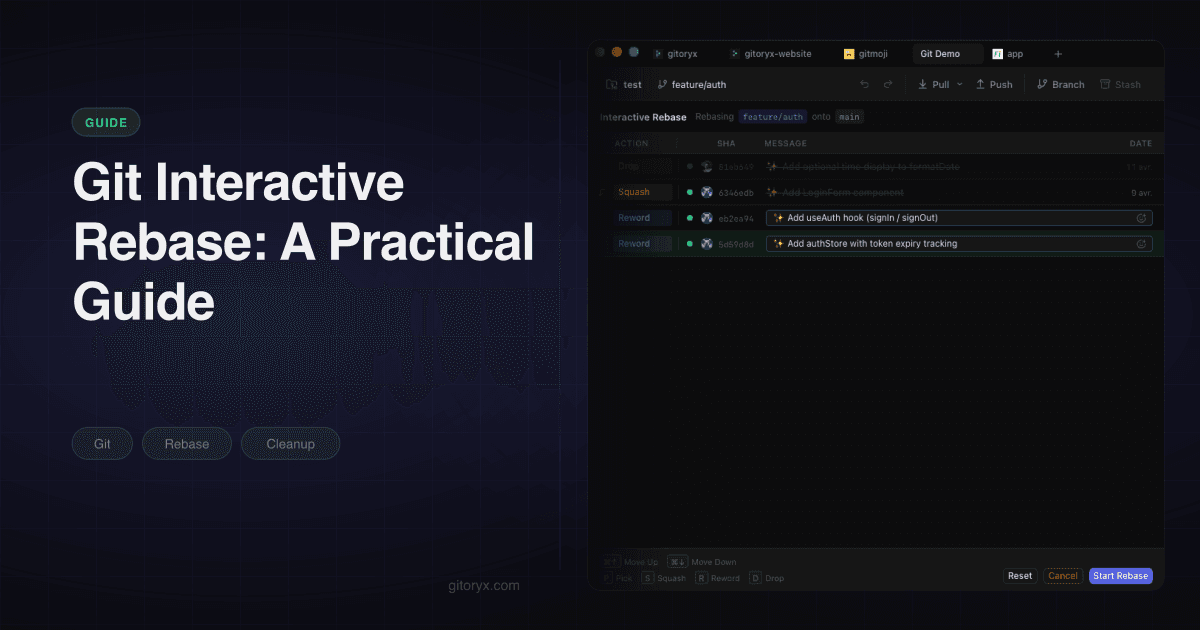
Interactive rebase is the fastest way to turn a messy branch into something a reviewer can actually read. Here is what each command does, how to recover when it goes wrong, and why the todo file is the worst part of it.
Read Article
Tower and Gitoryx if Git is central to your day, Fork if you want to buy it once, GitHub Desktop if you are just starting. Here is an honest look at where each client actually lands in 2026 and how to pick the right one for the way you work.
Read Article